
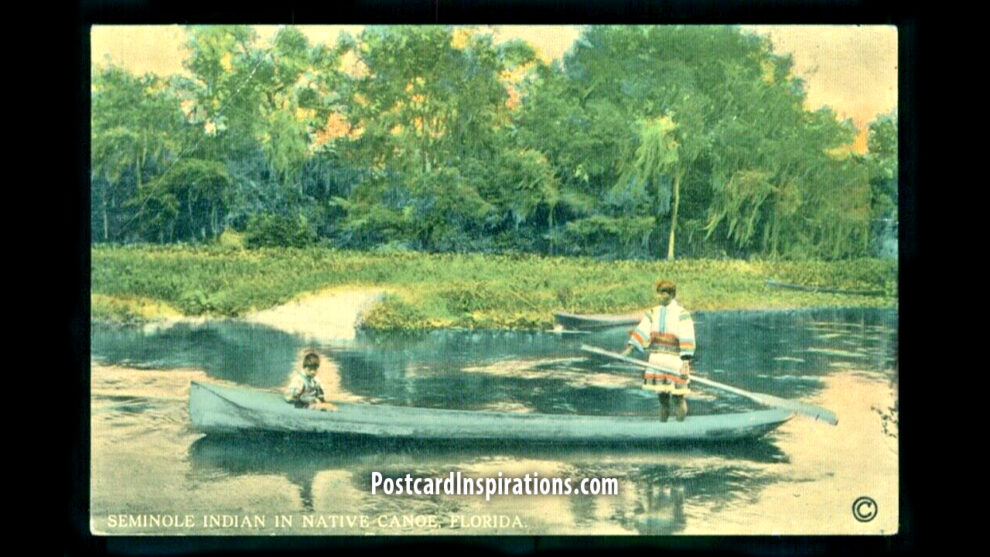
There’s something peaceful about this vintage postcard. It shows two Seminole people navigating Florida’s lush waterways in traditional dugout canoes, surrounded by thick vegetation and the still, dark water that has defined life in the Everglades for centuries. More than just a scenic image, this postcard tells the story of people who have lived in harmony with these waters long before Florida became the vacation capital of the world.
Let’s take a journey into the history behind this postcard, exploring the importance of canoes to the Seminole people and how they shaped survival, culture, and trade in Florida’s swamps and rivers.
The Seminole and the Dugout Canoe
For the Seminole people, water wasn’t an obstacle—it was a highway. Swamps, rivers, and creeks made up their world, and the best way to travel was by canoe. The Seminole didn’t use horses the way many Plains tribes did; instead, they relied on dugout canoes, which were expertly crafted from a single tree trunk—usually cypress.
To make these sturdy vessels, Seminole craftsmen followed a method perfected over generations:
1. A large cypress log was selected, usually from trees found in Florida’s vast wetlands.
2. The log was hollowed out using fire to soften the wood, making it easier to carve.
3. The canoe was shaped with hand tools to create a long, narrow vessel that could glide effortlessly through shallow waters.
4. The final product was polished and waterproofed, ready to be used for everything from hunting and fishing to trade and travel.
These canoes weren’t just tools; they were lifelines, allowing the Seminole to thrive in an environment that was impossible to navigate on foot alone.
Life on Florida’s Waterways
The Seminole lived deep in the Florida wilderness, especially after being pushed southward during the Seminole Wars of the 19th century. The Everglades, though inhospitable to outsiders, became a refuge for them.
With their canoes, the Seminole could:
• Hunt and Fish – They used the canoes to access the best fishing spots, setting traps or using spears to catch fish and turtles.
• Transport Goods – Canoes were vital for trade, allowing goods like animal hides, woven goods, and medicinal plants to be transported between settlements.
• Gather Resources – The canoes allowed access to deeper parts of the wetlands, where they could collect plants for food, medicine, or weaving.
• Escape Danger – When conflicts arose, the ability to move quickly and quietly through waterways was a major advantage.
Even children learned to paddle at a young age, mastering the slow-moving waters of Florida’s swamps and rivers.
The Back of the Postcard – A Simple Message with a Deeper Story
The back of this postcard belongs to the Florida Artistic Series, a collection of hand-colored images that captured the beauty and culture of early 20th-century Florida. Unlike modern postcards, which often feature glossy photography, this one was carefully designed to look like an artist’s painting—adding to its vintage charm.
The message reads simply:
“Seminole Indian in Native Canoe, Florida.”
Though brief, it speaks volumes. This is not just a glimpse into the past—it’s a look at a way of life that existed for centuries and still carries on today.
The Seminole Today – Preserving Tradition
Though traditional dugout canoes are no longer the primary mode of transportation for the Seminole, they are still an important part of their culture. The Seminole Tribe of Florida, recognized as a sovereign nation, continues to honor its ancestors through canoe-making demonstrations, storytelling, and efforts to protect the environment it has called home for generations.
Some Seminole artists and craftsmen still carve dugout canoes, preserving the skill and teaching younger generations. Canoe races and cultural events also help keep this heritage alive, reminding both the Seminole and visitors alike of the deep connection between the people and the water.
Why This Postcard Matters to Me
This postcard is more than just an old souvenir—it’s a window into a world that many don’t realize existed. It shows a time when the Seminole were not just surviving, but thriving in the Everglades, mastering the waters that others feared. It reminds us that Florida wasn’t always about theme parks and beaches—it was a wild, untamed land where the Seminole carved out their own place, often against the odds.
For postcard collectors, it’s a valuable piece of Florida history. For those interested in Native American culture, it’s a visual reminder of ingenuity, resilience, and adaptation. And for anyone who has ever paddled through Florida’s rivers or seen a canoe glide silently through the water, it’s a connection to a time when life moved at the rhythm of the current.
Wouldn’t it be something to drift down one of these ancient waterways, seeing Florida as the Seminole once did?