
Some postcards show grand hotels, beaches, or amusement parks, but others capture the everyday life of a place—something ordinary yet fascinating when seen through the lens of history. This postcard, featuring an aerial view of the Municipal Trailer Park in Tampa, Florida, is a perfect example. It’s a snapshot of a unique period in American life, when trailer parks weren’t just stopovers for travelers but thriving residential communities.
The Rise of Trailer Parks in America
In the early to mid-20th century, trailer parks were a practical and popular housing option, particularly in Florida. During the Great Depression and World War II, Americans frequently moved in search of work, and trailers provided affordable, mobile living spaces. Florida, with its warm climate and seasonal economy, became a significant destination for these early trailer communities.
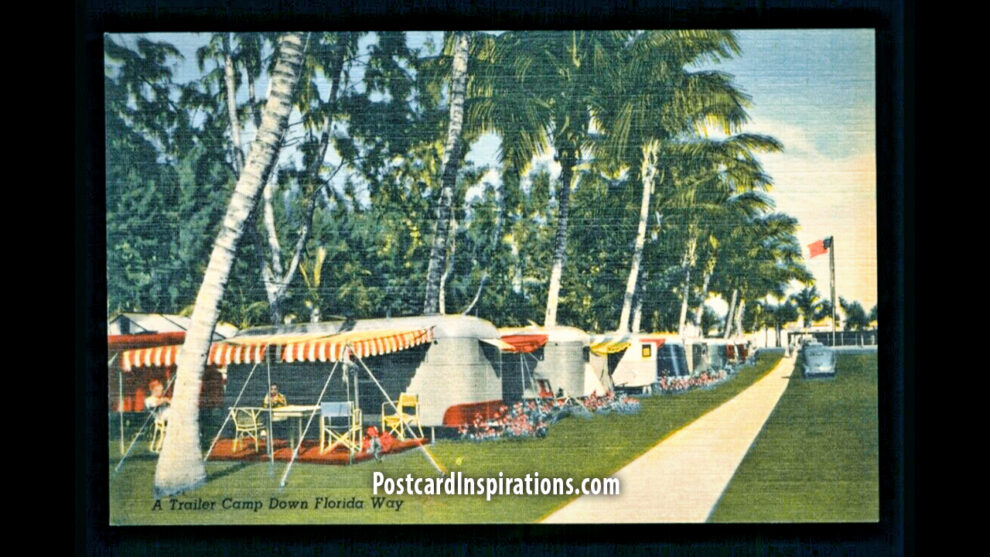
By the time this postcard was produced—likely in the 1940s or 1950s—trailer parks had evolved into more than just temporary housing. Retirees, snowbirds, and families looking for an inexpensive way to live near Florida’s growing cities embraced trailer life. Many of these parks, like Tampa’s Municipal Trailer Park, were run by local governments and offered basic amenities in a well-organized layout, as seen in the postcard.
A Closer Look at the Postcard Scene
The Municipal Trailer Park in Tampa was one of many government-run trailer parks designed to provide affordable housing. The aerial view on the postcard shows rows of neatly arranged trailers, a central community building with a chimney (possibly a recreation hall or administrative office), and tree-lined streets. In the background, there’s a river or lake, suggesting the park was located near a scenic waterfront area.
These parks weren’t just about low-cost housing; they were social hubs. Residents formed close-knit communities, much like small towns. There were often organized activities, dances, and communal gatherings in the recreation halls. Living in a trailer park in Florida at the time wasn’t seen as a step down—it was an affordable, efficient way to enjoy the sunshine and mild winters without the cost of traditional housing.
What Happened to the Tampa Municipal Trailer Park?
Like many early trailer parks, Tampa’s Municipal Trailer Park eventually disappeared. As Florida’s cities expanded and land became more valuable, these parks were either shut down, redeveloped, or moved to less central locations. Today, Tampa is a booming metropolitan area, and most of its former trailer parks have given way to modern housing developments, businesses, or highways.
While trailer parks still exist across Florida, their role has shifted. Many now cater specifically to retirees, offering upscale manufactured homes in gated communities. Others serve as temporary housing for seasonal workers or as affordable housing in rapidly growing cities. The classic mid-century trailer park lifestyle, as seen in this postcard, has largely faded into history.
A Postcard That Captures a Unique Era
This postcard is a reminder of a time when trailer parks were seen as an innovative housing solution, not just a last resort. It represents an era of American life when people sought freedom, affordability, and community in places like Tampa’s Municipal Trailer Park.
For postcard collectors, this is an unusual and fascinating piece—a glimpse into Florida’s mid-century history that might not be as well-documented as its beaches or theme parks. It’s a piece of everyday life, captured in ink and color, showing a world that once was and will never be quite the same again.
This postcard and other historical postcards are up for grabs; click here.