
Some postcards capture more than just a place—they offer a glimpse into a different time, a different way of life. This postcard from Tropical Hobbyland, a once-popular Miami attraction, is one of those. It features Chief Sam Willie, a Seminole, teaching a young girl how to draw a bow and arrow, a skill that was essential to the Seminole people long before the arrival of rifles.
While this card is a colorful and nostalgic representation of old Florida tourism, it also raises curiosity about the history behind it—both of the attraction itself and the Seminole people it sought to showcase.
What Was Tropical Hobbyland?
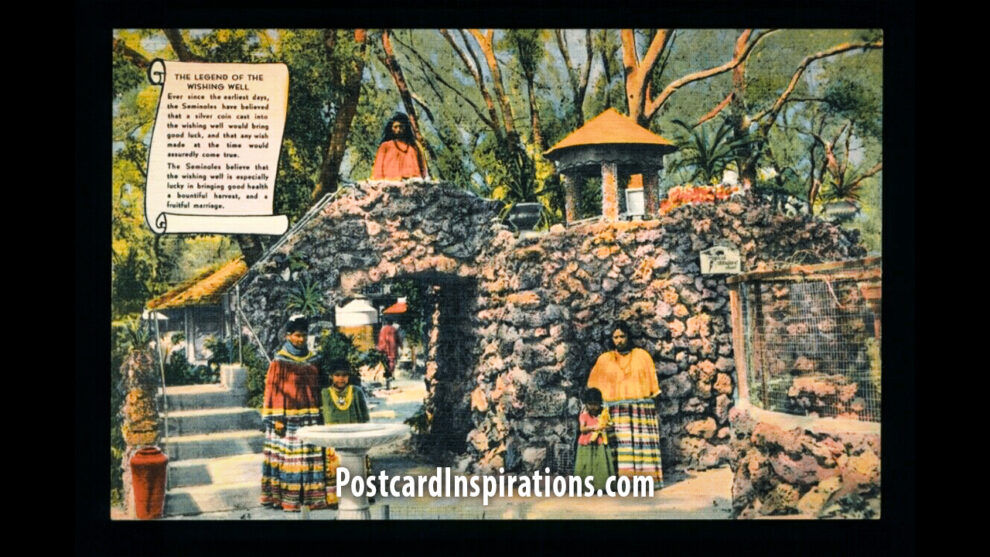
Tropical Hobbyland was one of Miami’s many mid-century roadside attractions, designed to give tourists a taste of Florida’s Native American heritage, exotic wildlife, and tropical scenery. Located on Northwest 27th Avenue at 15th Street, it operated in the 1940s and 1950s, offering visitors a chance to see Seminole culture up close.
The park featured thatched-roof chickee huts, alligator wrestling, and traditional crafts, all presented as entertainment for curious tourists. Attractions like this were common at the time, blending history with spectacle to draw in crowds. While today we may view such exhibits through a different lens, back then, they were some of the only ways many Americans learned about Native cultures.
Seminole men and women, like Chief Sam Willie in the postcard, would demonstrate skills such as archery, beadwork, and patchwork sewing—crafts that remain a vital part of Seminole culture today. The Seminoles were known as some of the finest marksmen among Native American tribes, their expertise in archery allowing them to hunt and protect their communities long before the introduction of firearms.
The Seminole People and Their History
The Seminole Tribe of Florida has a deep and resilient history. Originally part of the Creek Nation, the Seminoles migrated to Florida in the 18th century, forming their own distinct identity. Throughout the 19th century, they fought against U.S. forces in the three Seminole Wars, resisting forced removal from their lands. Some Seminoles were eventually forced to relocate to present-day Oklahoma, but others retreated deep into the Florida Everglades, where their descendants remain today.
Despite these challenges, the Seminoles adapted, maintaining their traditions while also embracing new economic opportunities. Attractions like Tropical Hobbyland, while primarily for entertainment, also provided income for Seminole families, who demonstrated their skills and sold handmade crafts to tourists.
Today, the Seminole Tribe is known for its successful business ventures, including casinos, tourism, and cultural preservation efforts. They continue to pass down traditions like archery and intricate patchwork designs, just as Chief Sam Willie is doing in the postcard.
What Happened to Tropical Hobbyland?
Like many of Florida’s early roadside attractions, Tropical Hobbyland eventually faded into history. By the 1960s, larger theme parks like Disney World and Busch Gardens dominated the tourism industry, and smaller attractions struggled to survive. The site where Tropical Hobbyland once stood is now part of modern Miami’s urban sprawl, with little trace of its existence remaining.
However, its legacy lives on in postcards like this one. While it was a product of its time—presenting a simplified, often romanticized view of Seminole life—it also served as a bridge between cultures, introducing many visitors to Florida’s Indigenous people for the first time.
A Postcard That Tells a Story
This postcard isn’t just a souvenir—it’s a piece of Florida’s history. It captures a moment in time when tourists flocked to places like Tropical Hobbyland to see Seminole traditions firsthand. It also serves as a reminder of the resilience of the Seminole people, who have maintained their culture through centuries of change.
While the roadside attraction may be long gone, the Seminoles remain, thriving as a sovereign nation and continuing to share their heritage in their own way. In that sense, the story behind this postcard is far from over—it’s just another chapter in the ongoing history of the Seminole Tribe of Florida.
This postcard and other historical postcards are up for grabs; click here.