

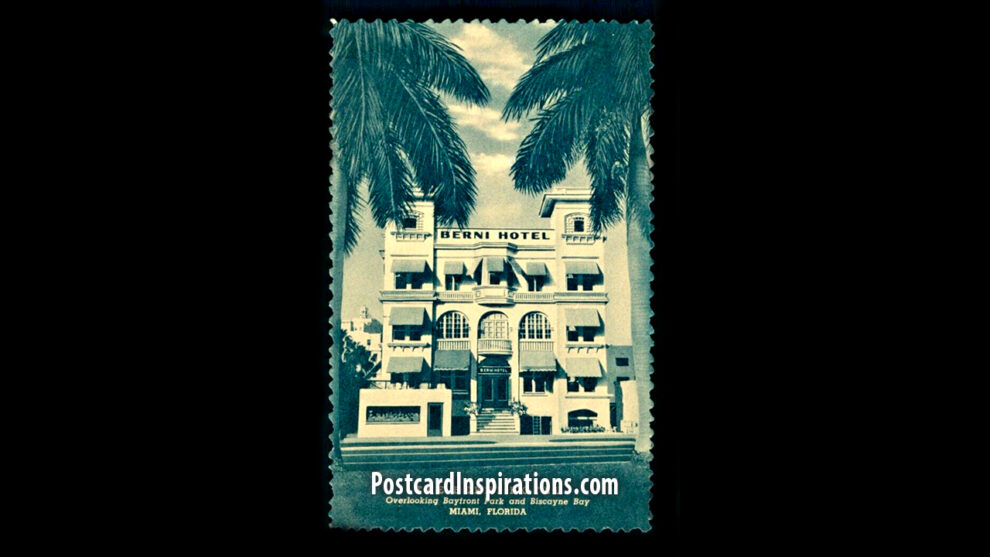
Imagine stepping off a bustling Biscayne Boulevard, the air filled with the scent of salt water drifting in from the bay. The Berni Hotel stands ahead, framed by towering palms, its Mediterranean Revival-style façade radiating a sense of old-world charm. This was Miami in its early days—before the glass high-rises, before the mega-resorts, when a stay in the Magic City meant elegance, simplicity, and a front-row seat to tropical beauty.
For those who remember Miami’s past, the Berni Hotel represents an era of small, family-run hotels that dotted the skyline long before corporate chains took over. For younger travelers, this is a window into what Miami once was—a city shaped by its Art Deco and Spanish-style architecture, with a vibrancy that came not from neon and nightclubs but from the energy of the streets, the music, and the people.
A Hotel in the Heart of Miami
The back of the postcard boasts about the hotel’s “superb location” on Biscayne Boulevard, with a view of Bayfront Park and only two blocks from Flagler Street, the heart of the city’s shopping and entertainment district. In its time, the Berni Hotel was a convenient and comfortable stop for travelers looking to experience Miami’s tropical allure.
Guests could stroll down to Flagler Street, where bustling department stores like Burdine’s (Florida’s very own Macy’s) and five-and-dime shops kept the sidewalks alive with shoppers. A few steps more, and they’d reach theaters showcasing the latest Hollywood films, jazz-filled lounges, and grand hotels that defined Miami’s nightlife.
The Berni was perfectly situated for those arriving by train, bus, or even seaplane. The nearby railway and bus terminals ensured Miami was a gateway to adventure, whether visitors were continuing south to Key West or westward into the untamed Everglades.
The Miami That Once Was
When the Berni Hotel was at its peak, Miami was undergoing one of its greatest transformations. The city had grown from a quiet winter escape for the wealthy into a thriving year-round destination. By the mid-20th century, the Art Deco boom had reshaped Miami Beach, and downtown was becoming an exciting mix of Latin American influences, post-war optimism, and the beginnings of a nightlife scene that would later define the city.
Bayfront Park, just steps from the hotel, was where visitors could sit beneath swaying palms, watch cruise ships depart, or listen to live bands performing in the bandshell. The park remains a part of Miami’s culture today, though skyscrapers have replaced many of the small hotels and shops that once surrounded it.
What Happened to the Berni Hotel?
Time changes everything, and Miami is no exception. As tourism grew, so did the demand for larger, more modern accommodations. Small hotels like the Berni were either replaced or absorbed by the city’s rapid expansion. By the late 20th century, many of the classic hotels along Biscayne Boulevard had disappeared, giving way to the towering developments that now define Miami’s skyline.
While the Berni Hotel itself no longer stands, its legacy lives on through images like this one—a reminder of an era when travel was slower, hotels had names rather than chains, and Miami was still shaping itself into the metropolis it would become.
A Place That Still Calls to Travelers
For those who remember Miami’s past, this postcard evokes a city that felt more intimate, where a hotel wasn’t just a place to sleep but part of the experience. And for young travelers, there’s something inspiring about the Miami of the 1940s and ‘50s—a place where history, architecture, and culture blended to create something special.
Wouldn’t it be something to walk down Biscayne Boulevard as it was then, check in at a place like the Berni Hotel, and see Miami the way guests of another era once did?